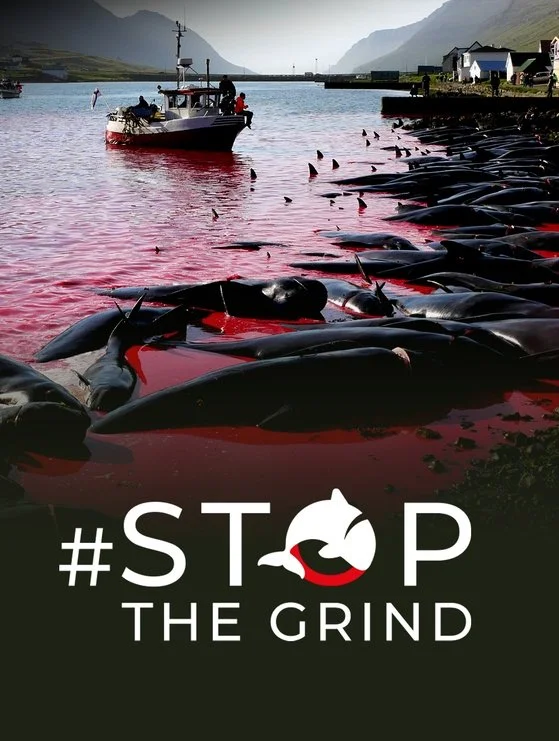
Why I Joined Sea Shepherd
By Matthew David Kaplan
August 2026

I joined Sea Shepherd to film something I hope never happens.
I’m now in my last week of my six weeks as a member of Sea Shepherd’s Faroe Islands Crew for the Living Fjords campaign. I live in a house with five other crew and our job is easy to describe and hard to do. When a Grind is called, we rush to the scene to film and document it to show the world what is happening and help provide the documentation that will help end it.
What the Grind actually is
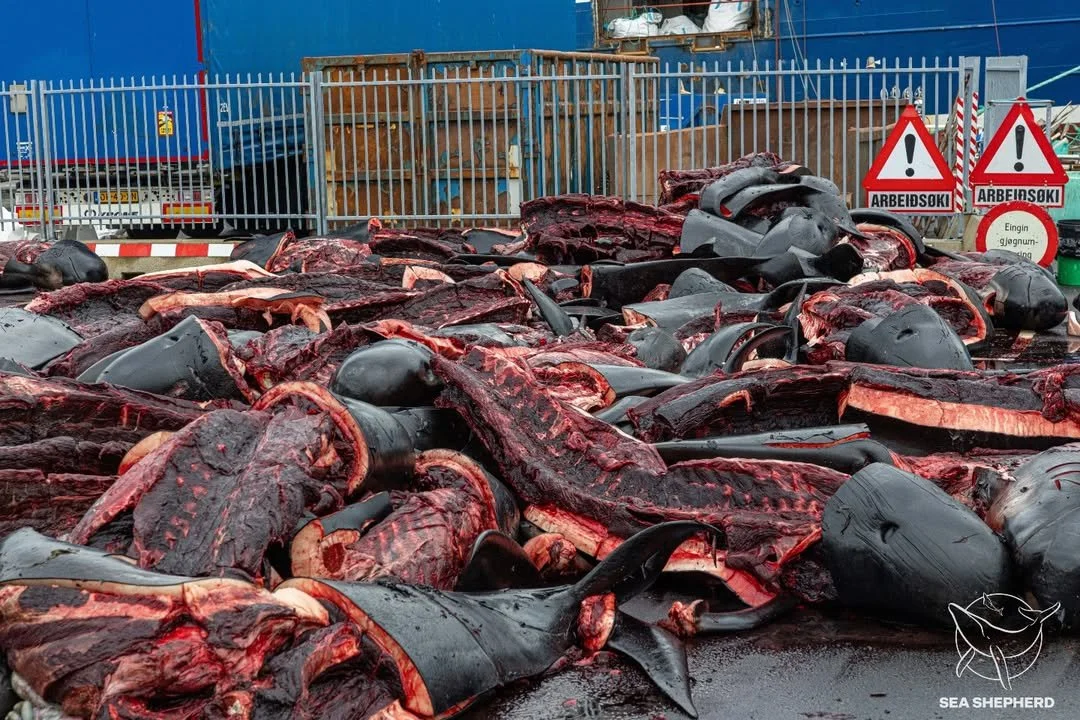
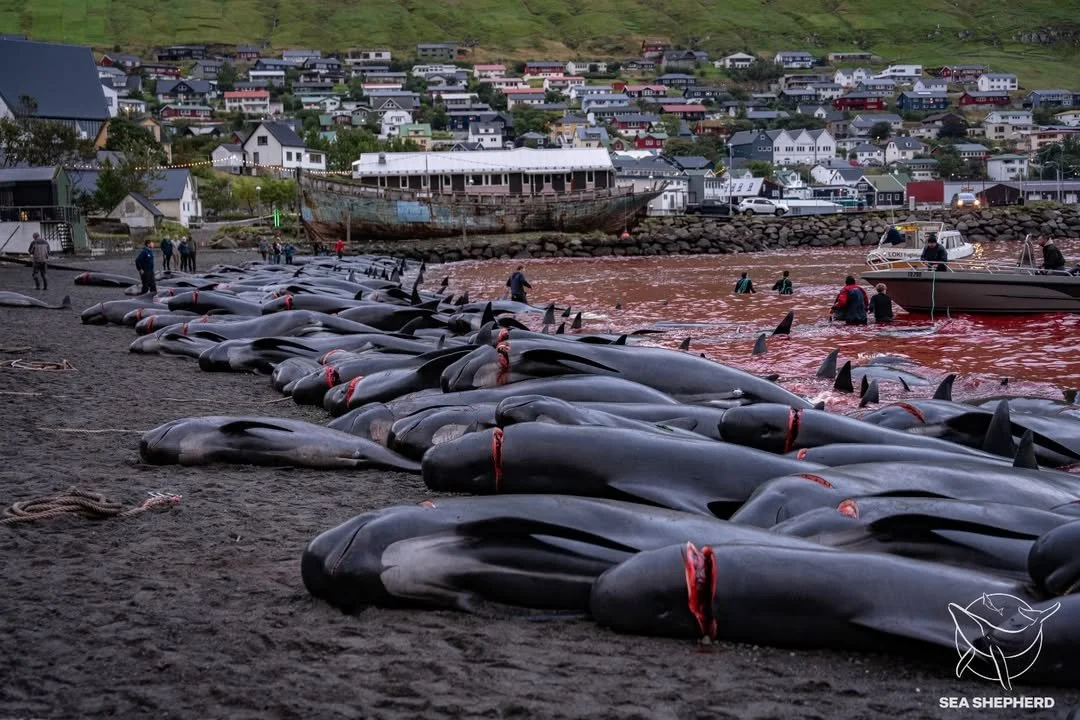
The Grindadráp, or Grind, is the hunt of pilot whales or in some cases white-sided dolphins or bottlenose whales. When a pod is spotted near the coast, boats surround them in a wide arc and the crews use engine noise and banging on the hulls to push the animals toward one of the designated killing bays. In the shallows the whales strand. Then people walk into the water with knives and spinal lances and kill them. The pilot whales are then dragged back into the water, attached to the boats, and brought to an area where the meat and blubber are butchered and given out to the community.
The written records go back to at least 1584, but it is widely believed that Grinds started 500 years earlier than that, with Norse settlers on a group of treeless islands in the North Atlantic where almost nothing grows. For most of that history the argument for the Grind was simple and fair. People needed the food in order to survive.
Today there is no quota. There is no season. A hunt can happen whenever a pod comes close enough to shore. In a given year, roughly 1,000 pilot whales and dolphins are killed here.
Five weeks, no Grind
There has not been a Grind since I arrived. That sounds like good news, until you look at what has already happened in 2026.
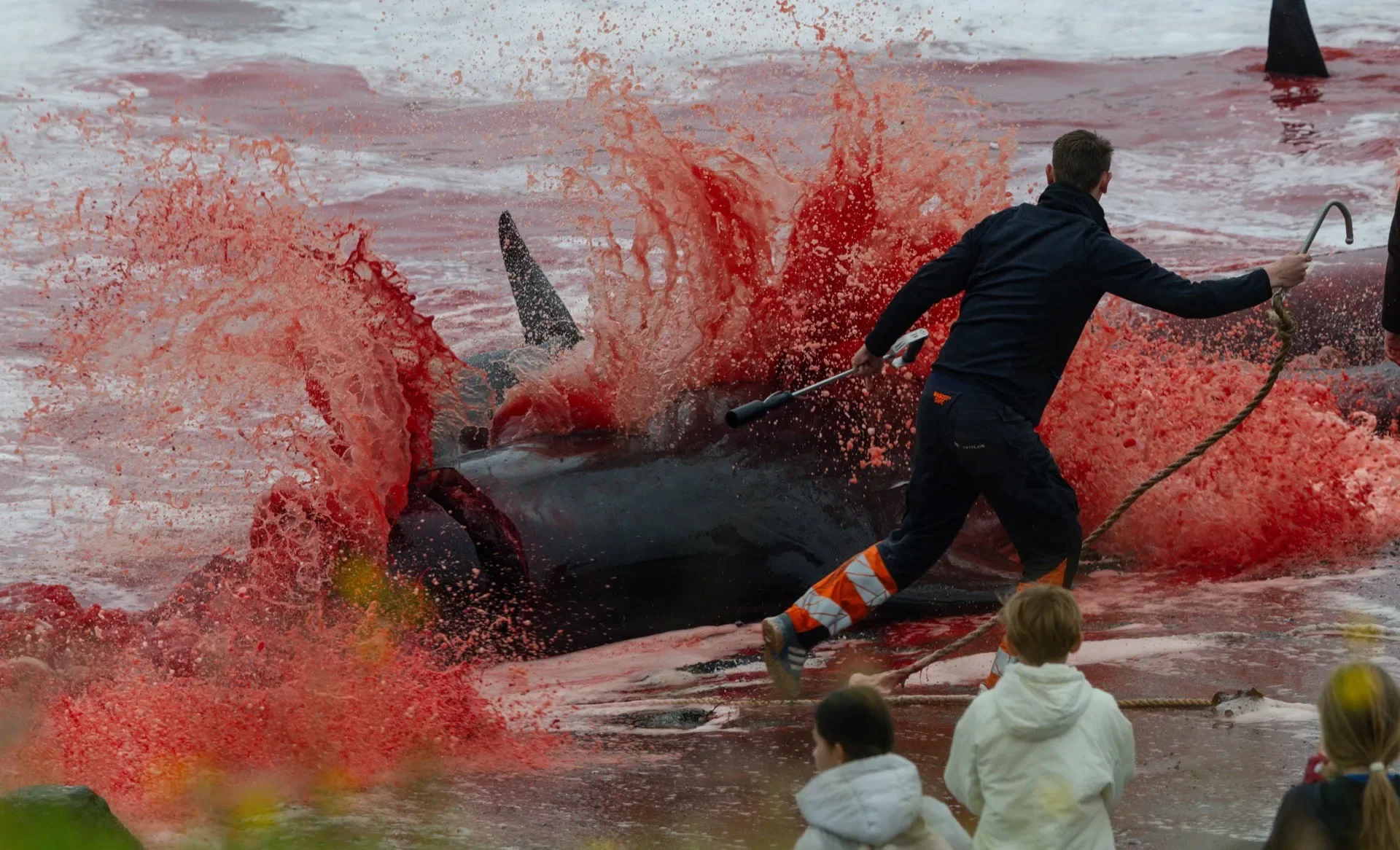
On May 27, a pod of more than 400 long-finned pilot whales was spotted off Tórshavn. Dozens of boats drove them into a shallow bay. Several hundred people were already waiting on shore. The whole pod was dead in a little over an hour. There were not enough spinal lances for that many animals at once, so many of the whales were killed with knives alone. That same evening, two more pods of white-sided dolphins were killed in separate hunts. The day's toll was more than 700 animals, one of the deadliest days for pilot whales and dolphins here in history.
By the end of May, four Grinds had killed around 830 animals. Then nothing, for two months.
While I was in the Faroe Islands, there were two moments where pods of pilot whales were spotted offshore and we immediately left the house in cars and prepared to dive to the killing beach to film and document. Fortunately, on both of those occasions, the Grinds were called off becuase the Grind Sheriff declared the meat was not needed as their freezers were full.
There is one more detail from May that I keep coming back to. Days before those hunts, the Faroese parliament voted unanimously to remove hunting from the scope of the Animal Welfare Act. No hunter had ever actually been charged under that law. But it was the one place where cruelty during a Grind could in theory be answered for, and now it is gone.
The people here are not the problem
It would be easy to write this piece as if the Faroese are monsters. They are not. Nearly every Faroese person I have met has been friendly, direct, and generous with their time. This is a small country where people look after each other, and I have liked being here more than I expected to.
To many people here, a Grind is fishing. Not sport, not business. Food, shared out, the way it has always been. And the Faroese also ask a fair question: most of the world kills cows, pigs, chickens, and fish.
I can think of several answers to that. Pilot whales live in matriarchal pods, several generations that stay together for decades, which is why an entire family can be driven ashore at once instead of scattering. Every pod killed contains pregnant females and juveniles. Independent research published last year concluded that the nature of the hunt makes it impossible to carry out humanely.
But set all of that aside. There is one argument that does not require anyone to agree with me about any of it.
The meat is toxic, and their own government says so
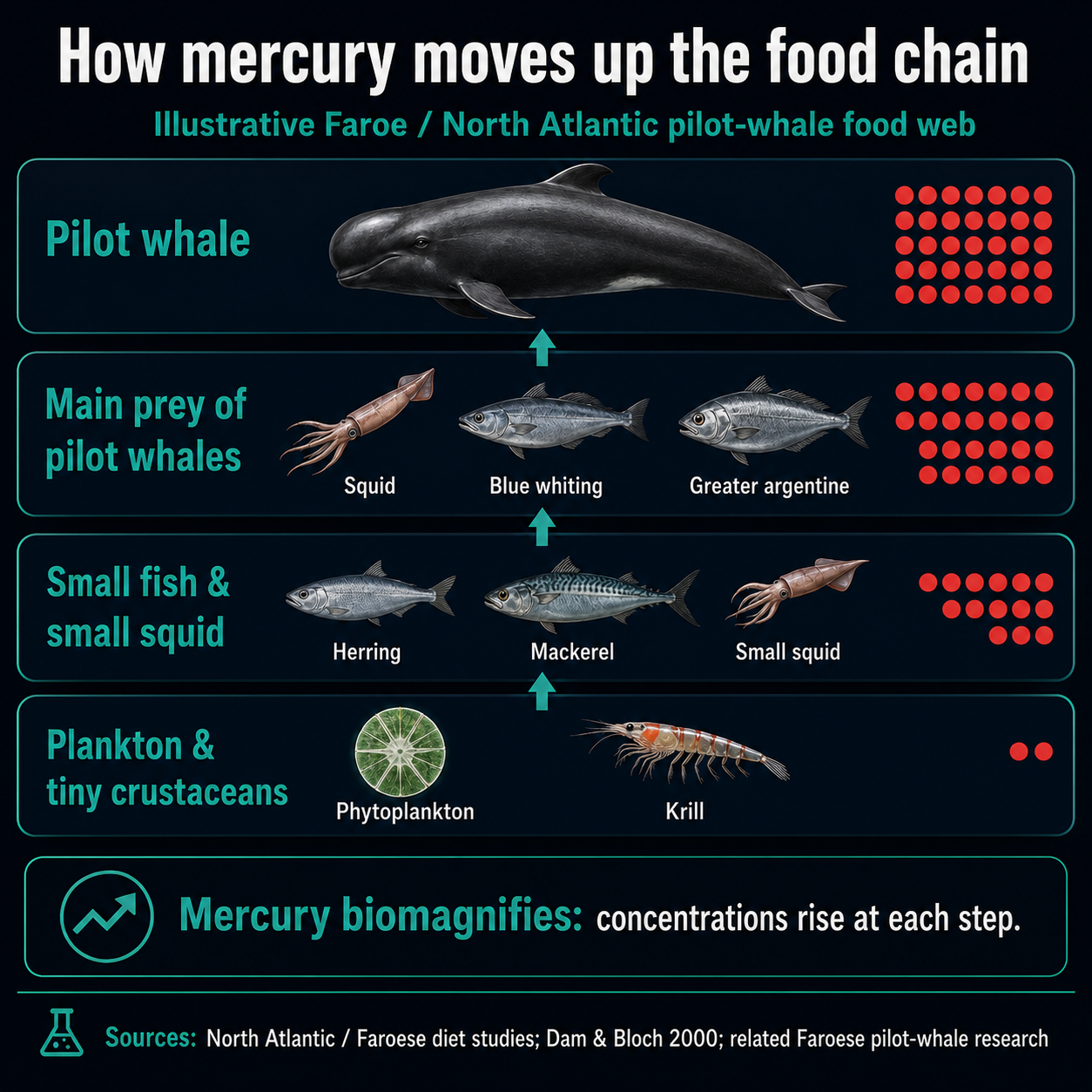
Pilot whales feed near the top of the food chain. Industrial mercury from across the ocean concentrates at every step up that chain, then keeps building in the whale over its lifetime. It has been shown that most pilot whales carry 10 to 20 times the mercury of cod pulled from the same water or more. More than shark. More than swordfish. The fish that health authorities tell pregnant women never to eat.
Faroese scientists have followed local families for forty years, and the work is still running today. Methylmercury crosses the placenta, and an unborn child absorbs more of it than the mother. Children exposed before birth grow up with lasting harm to memory, attention, and language. That damage does not heal. It is the same research that helped set mercury safety limits for the rest of the world.
In 2008, the Faroe Islands' own chief medical officers told their government that pilot whale is no longer fit for human consumption. That advice still stands. Pregnant women and young girls are told not to eat it at all.
Meanwhile, the ministry responsible for the hunt describes the meat as "a healthy and nourishing local source of food." Both of those things cannot be true.
The Grind began because people needed to eat. The food is now poison. Whatever anyone believes about tradition, nobody should be encouraged to feed this to their children.
Why Sea Shepherd

I have respected Sea Shepherd's work for more than a decade. They have been opposing this hunt since 1983, long before it was something the international press paid attention to, and they are still here, every season, on the ground.
I have worked with ocean nonprofits for years and I believe in what they do. Research, education, restoration, policy. None of that is optional and none of it is easy. But most of my own contribution has been talking. Films, articles, expeditions, explaining things to people who were already halfway convinced.
This is different. This is standing in the place where the thing I object to actually happens, with a camera, on the day it happens. Being part of it has been profoundly rewarding, and I did not expect to feel that as strongly as I do.
One week left
I do not know if a Grind will be called before I go and I hope I won’t have to witness one. Maybe we will be lucky and there will be no more Grinds for the remainder of the year given how much meat they collected from the massive slaughter on May 27. The rest of me knows that if it is, I need to be standing there, because the footage is the only thing that has moved this conversation at all.
I have spent over twenty years underwater with marine animals. I do not think people should be killing pilot whales and dolphins. That is why I am here.
And if you take one thing from this, take the smallest and hardest one to argue with. The Faroese government's own doctors say this meat is not safe to eat. A hunt that exists to feed people is producing food its own health authorities warn them to stay away from.
That fact alone should be enough to end it.
#StopTheGrind